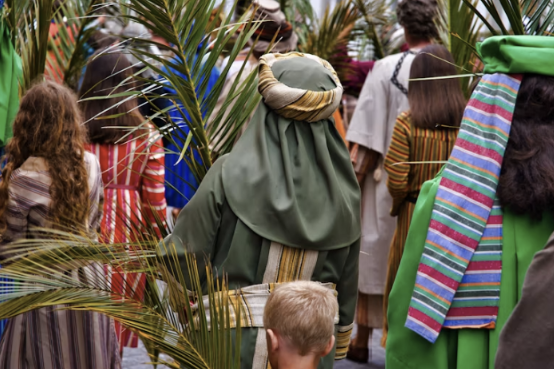
You've probably seen kids waving palm branches in church or heard the story of Jesus riding into town on a donkey. Palm Sunday marks that moment in the Gospels, but it carries weight far beyond a parade. It sets the stage for everything that follows in Holy Week and shows exactly who Jesus claimed to be.
The accounts in Matthew 21, Mark 11, Luke 19, and John 12 describe the same event with small details that line up. Crowds spread cloaks and branches on the road while shouting "Hosanna" and quoting Psalm 118. They hailed Jesus as the Son of David, the coming King. Yet within days many of those same voices turned against Him. That tension reveals the heart of the Gospel story.
Understanding Palm Sunday helps you see how prophecy, history, and personal faith connect. It is not just an ancient custom. It invites you to decide what you will do with Jesus today.
The Day Jesus Rode into Jerusalem
Picture the scene outside the city walls. Passover drew thousands of pilgrims to Jerusalem, swelling the population and stirring political tension under Roman rule. Jesus sent two disciples ahead to fetch a donkey and its colt, exactly as Zechariah 9:9 had foretold centuries earlier. He mounted the young animal and started down the Mount of Olives toward the temple.
People who had heard about the raising of Lazarus began spreading word. They cut palm branches, a symbol often linked to victory, and laid them along with their own coats in the road. The shouts grew loud: "Blessed is the King who comes in the name of the Lord!" The Pharisees told Jesus to quiet the crowd, but He answered that even the stones would cry out if the people stayed silent.
This was no random procession. Every step fulfilled specific Old Testament promises about the Messiah. The choice of a donkey instead of a warhorse signaled peaceful kingship, yet the timing during Passover week carried explosive meaning. Crowds expected a deliverer from Rome. Jesus came to deliver from sin.
Old Testament Prophecies Fulfilled in One Afternoon
Zechariah wrote the clearest prediction more than 500 years before the event. He described a king arriving on a donkey, righteous and having salvation, yet humble. On that Sunday every detail matched. The disciples did not realize it at first, John later noted, but after the resurrection the connections became obvious.
Psalm 118 also supplied the words the crowd shouted. That psalm was sung during Passover celebrations, but the people applied its lines directly to Jesus. They called Him the one who came in the Lord's name. The religious leaders heard the claim and found it dangerous.
These fulfilled predictions strengthen trust in Scripture. The same God who arranged centuries-old details around one afternoon in Jerusalem keeps His promises to you. When life feels uncertain, the accuracy of these prophecies gives solid ground for believing what Jesus says about forgiveness and eternal life.
Why the Crowd's Welcome Turned So Quickly
By Thursday night the same city that cheered now plotted. The expectations of the crowd did not match Jesus' mission. They wanted political freedom. Jesus offered freedom from sin and judgment. When He refused to lead a revolt, disappointment turned to anger.
Human nature has not changed. Many still want a Jesus who fixes circumstances without touching the heart. Palm Sunday shows what happens when people meet the real Jesus instead of the version they imagined. Some receive Him. Others reject Him when He does not perform on their terms.
The swift shift also highlights the cost of true discipleship. Following Jesus means surrendering your own agenda. The people waving palms one day and calling for crucifixion the next remind us that enthusiasm without repentance fades fast. Only faith that trusts Jesus as Lord lasts.
Archaeological Clues That Match the Gospel Record
Historians and archaeologists have uncovered evidence that lines up with the setting of Palm Sunday. The Pilate Stone, discovered in Caesarea Maritima, confirms Pontius Pilate's role as prefect of Judea during the exact years the Gospels describe. His presence in Jerusalem during Passover matches the tension recorded in the biblical accounts.
Excavations near the Temple Mount have revealed first-century streets and steps that pilgrims would have used. The topography still shows the steep descent from the Mount of Olives into the Kidron Valley and up to the city gates. These physical details make the route Jesus took easy to trace today.
Such findings do not prove faith, yet they remove the idea that the story is pure legend. The Bible names real places, real rulers, and real events that outside sources and dirt archaeology continue to support. This reliability matters when you consider the central claim of Palm Sunday: the King who entered the city is the same one who died and rose for your sins.
How Churches Celebrate Palm Sunday Today
Many congregations begin the service outside or in the parking lot, handing out palm branches before processing into the sanctuary while singing hymns. Children often lead the way, echoing the original crowd. Pastors read the Gospel accounts aloud so the story stays central.
Some churches weave in the full sweep of Holy Week during the message, connecting the cheers to the cross and empty tomb. Others focus on personal response, inviting listeners to examine whether they truly welcome Jesus as King or simply admire the story from a distance.
The celebration is never meant to stay inside the building. It moves into the week that follows, leading believers to Maundy Thursday and Good Friday services. The palms serve as a visual reminder that the same Jesus who accepted praise also accepted the cross.
What Palm Sunday Means for Your Life Right Now
You stand in a similar place to those first-century crowds. Jesus still comes to you, not on a warhorse but in humility, offering peace with God. The question is whether you will receive Him on His terms.
Scripture is clear that all have sinned and fall short. No amount of religious activity or good effort can remove that debt. Jesus, fully God and fully man, lived the perfect life you could not live, then took your punishment on the cross. Three days later He rose, proving the payment was accepted.
Palm Sunday points forward to that finished work. The King who rode into Jerusalem did so to die in your place. When you turn from sin and trust Him alone for salvation, you receive eternal life. That decision changes everything that follows.
Dear Jesus, I believe you died for my sins and rose again. I confess you as my Lord and Savior. Please forgive me and come into my life. Amen.
Find a local church at TrueLife.org's Church Finder to grow in your new faith. If you already know Christ, share the Gospel with free cards from TrueLife.org and invite others to the same hope you have received.