You open your Bible to Genesis 6 and the word Nephilim jumps out. Right away you wonder what these beings were and why God included them in His Word. The question is honest and common, and the answer sits in the text itself rather than in later legends.
Four passages use the term or clearly describe the same group. Each one adds a piece to the picture without turning the story into myth. When you read them together you see a pattern of human rebellion, angelic overreach, and God's judgment that still points straight to our need for Jesus today.
Genesis 6 and the First Clear Reference
Genesis 6:4 states that the Nephilim were on the earth in those days and also afterward. The verse sits inside a larger account of increasing wickedness that grieved God. It describes how the sons of God came in to the daughters of men and produced offspring who became the mighty men of old.
The context matters. Just before this verse the text says every intention of the thoughts of man's heart was only evil continually. The Nephilim appear as part of that moral collapse. They are not presented as heroes or gods but as evidence that boundaries God set had been crossed.
Many readers notice the timing. This happened before the flood. The flood itself came as judgment on the violence and corruption that filled the earth. The Nephilim serve as one marker of how far things had gone wrong.
Archaeology supports the historical setting of this chapter. The Ebla Tablets from ancient Syria list place names and personal names that match the region and era described in early Genesis. These clay records show the same cultural world the Bible places Noah inside, giving concrete evidence that the backdrop is real rather than invented.
Numbers 13 and the Spies' Report
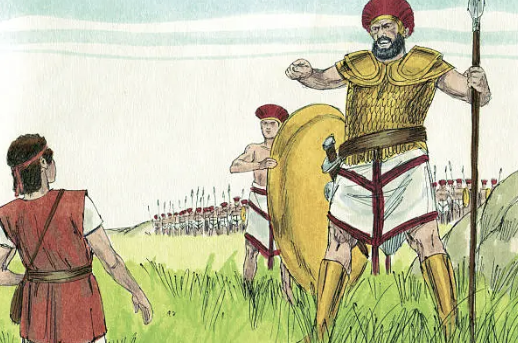
Centuries later the Israelite spies return from Canaan and report seeing the descendants of Anak, part of the Nephilim. They describe men of great size and say the land devours its inhabitants. Their fear spreads through the camp and leads to forty years of wandering.
Notice the detail the text gives. The spies name specific people groups and locations. They are not speaking in vague terms about legends but about real fortified cities and actual giants they claim to have seen. Later books confirm that some of these groups remained until David's time.
The report in Numbers shows how the memory of the Nephilim still influenced decisions hundreds of years after the flood. Fear based on that memory kept an entire generation from entering the land God had promised. The passage illustrates how past rebellion can shape present faith when it is not handed over to God.
Other Passages That Fill Out the Picture
Deuteronomy 2 and 3 mention the Rephaim and the Emim, groups described with similar stature and strength. Joshua 12 lists kings defeated by Israel, including some connected to these same lines. These references treat the Nephilim and their descendants as historical enemies rather than symbolic figures.
The Bible never gives a full biography of any single Nephilim. Instead it uses them to show the result of crossing lines God established. The pattern is consistent: when people and fallen beings ignore God's order, violence and fear follow. That same pattern appears in our own hearts when we choose our way over His.
Free will is the reason evil exists at all. God could have made robots that never rebel, but He wanted real relationship. Love that is forced is not love. The Nephilim story shows what happens when that freedom is used to reject God on a large scale, yet the same freedom lets us turn back to Him through Jesus.
How These Verses Point to Our Need for Salvation
The flood washed away the immediate threat, but sin remained in every human heart. No one escapes the problem the Nephilim illustrated. We all fall short, and no amount of strength or size can fix that.
Jesus entered our world as the only one who never crossed God's line. He lived the perfect life we cannot live and died the death we deserve. His resurrection proves the payment was accepted. When you trust Him, the same power that judged the ancient world now forgives and changes you.
The Bible does not leave us staring at giants. It moves the story forward to the cross. The Nephilim passages remind us how serious sin is, and the Gospel shows how complete the cure is in Christ alone.
Practical Steps When These Verses Raise Questions
Start by reading the four main passages slowly in context. Write down what each one actually says without adding outside stories. Compare them side by side and notice the repeated themes of judgment and mercy.
Talk with a pastor or mature believer about any remaining questions. The Church Finder at TrueLife.org can connect you with a Bible teaching church near you. Many people discover that honest discussion clears up confusion faster than reading alone.
If you have never trusted Jesus, the Nephilim account shows why you need Him. Pray a simple prayer from the heart: Dear Jesus, I believe you died for my sins and rose again. I confess you as my Lord and Savior. Please forgive me and come into my life. Amen. That step changes everything.
Share what you learn with someone else this week. TrueLife.org offers free Gospel cards you can use to start the conversation. The same Bible that records the Nephilim also records the good news that anyone who calls on Jesus will be saved.