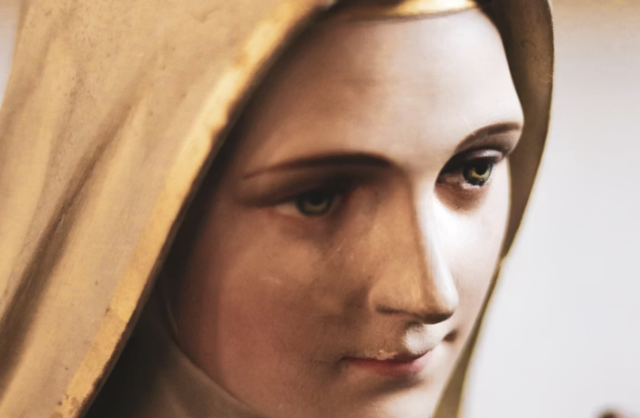
You have probably wondered about this question yourself. The Gospels tell us Mary was engaged to Joseph when the angel Gabriel appeared, but they stay silent on her exact age at the birth of Jesus. That silence leaves room for honest investigation rooted in the culture of first-century Judea and the broader reliability of Scripture.
Many believers today feel the same pull toward answers that Mary must have felt. She trusted God with her future even though she was young and unknown. Her story invites us to look deeper into the Bible's trustworthiness rather than guess at numbers alone.
Let's walk through what the text actually says, what ancient customs reveal, and how real archaeological finds strengthen our confidence in these events. Along the way we will see how this young woman's obedience points straight to the greater story of salvation through Jesus Christ.
Scripture's Quiet Details About Mary
The Gospel of Luke opens with Mary receiving the announcement that she would conceive by the Holy Spirit. Luke 1:27 describes her as a virgin betrothed to Joseph. In Jewish custom at that time, betrothal usually happened soon after a girl reached puberty, often between the ages of twelve and fifteen. The text never gives a number, yet the cultural setting points to youth.
Matthew 1:18-25 records Joseph's struggle and the angel's reassurance. Both accounts emphasize Mary's purity and her willing response in Luke 1:38. These verses show a young woman stepping into an enormous calling without hesitation. Her age does not diminish the miracle; it highlights God's pattern of using the humble and the young to accomplish His purposes.
Consider how the same chapter records Mary's visit to Elizabeth. Elizabeth calls her "blessed among women" in Luke 1:42. The detail that Mary stayed with Elizabeth for three months suggests she had the freedom and support of family during this early stage of pregnancy. Nothing in the narrative hints at an older woman; everything fits the profile of a teenage girl in ancient Israel.
Daily Life and Marriage Customs in First-Century Judea
Archaeologists and historians have pieced together what daily life looked like for Jewish families in Galilee and Judea. Girls typically married shortly after reaching physical maturity. Rabbinic writings from the period, though written later, reflect earlier customs that placed betrothal around age twelve or thirteen for girls.
Joseph's role as a carpenter would have placed the family among ordinary working people. A young bride would have learned household skills early, preparing her for marriage and motherhood. The journey to Bethlehem recorded in Luke 2:4-5 shows Mary traveling while pregnant, something expected of a young wife accompanying her husband for the census.
These customs were not harsh; they reflected the realities of shorter lifespans and the need to establish families quickly. Mary's situation was unique because of the miraculous conception, yet her age would have been normal for the time. The Bible presents her as fully capable, chosen by God, and faithful in her response.
Archaeological Finds That Anchor the Story
The Ketef Hinnom Scrolls, discovered near Jerusalem and dated to the seventh century BC, contain the priestly blessing from Numbers 6:24-26. These tiny silver amulets prove that the biblical text was already being copied and treasured centuries before Mary lived. Such finds demonstrate that the Scriptures we read today match what was known in ancient Israel.
When we read about Mary traveling to Bethlehem or later to Egypt, we can trust the geography and timing because archaeology keeps confirming the Bible's details. The same God who preserved His Word through centuries of copying also preserved the historical setting in which Mary raised the child who would save the world.
These discoveries do more than satisfy curiosity. They remove doubt so that the central message stands clear: God entered human history through the womb of a young Jewish girl. The reliability of the text invites us to trust the promise that follows in Luke 1:31-33, where the angel declares that Mary's son will reign forever.
Why Mary's Youth Matters for Our Faith Today
Many people today wrestle with feelings of inadequacy or timing. Mary shows us that God does not wait for perfect circumstances or advanced age. He calls ordinary people at ordinary stages of life and equips them by His Spirit.
Her story also reminds us that salvation does not come through human effort or maturity. A young girl could never earn the right to bear the Messiah. God chose her by grace, just as He offers grace to every person who turns to Jesus. The same power that overshadowed Mary now offers new life to anyone who believes.
Think about the practical side. If you are young and wondering whether God can use you, Mary's example answers yes. If you are older and feel your time has passed, her story still points to the same Savior who welcomes all ages. The focus remains on Christ, not on Mary's age.
The Greater Story That Changes Everything
We are all born with a sin nature that separates us from God. No amount of good works or religious effort can bridge that gap. Mary herself needed a Savior, which is why she rejoiced in God her Savior in Luke 1:47.
Jesus, fully God and fully man, lived the perfect life we could not live. He died on the cross to pay for our sins and rose again to conquer death. When we place our trust in Him alone, we receive forgiveness and eternal life. That is the heart of the Gospel, and it flows directly from the events surrounding Mary's pregnancy.
If you have never taken that step, consider praying this simple prayer right now: "Dear Jesus, I believe you died for my sins and rose again. I confess you as my Lord and Savior. Please forgive me and come into my life. Amen."
God stands ready to welcome you into His family today. Once you have trusted Christ, the next step is to connect with other believers who can help you grow. Visit TrueLife.org and use the Church Finder to locate a Bible-believing congregation near you. If you already know Jesus, share this hope with others using the free Gospel cards available in the resources section at TrueLife.org. Matthew 28:19-20 calls every follower to make disciples, and these simple tools make that command practical.