Evangelism Training That Builds Real Confidence
Jul 14, 2026
You've probably felt that knot in your stomach when the chance to mention Jesus comes up. Most of us have. Evangelism training isn't about turning everyone into a polished speaker. It's about giving regular people practical ways to point friends and strangers toward the gospel without freezing up.
The good news is that effective evangelism training focuses on small, repeatable actions rather than big performances. When churches teach these habits, members start inviting people week after week. Lives change because someone took thirty seconds to hand over a card or share a short sentence.
I've watched this play out in dozens of congregations. The ones that stick with simple training see steady growth. The ones that rely on guilt or complicated programs watch interest fade after a few weeks.
Why Most People Struggle Without Training
Without guidance, many believers stay silent because they fear saying the wrong thing. They picture arguments or long debates they aren't ready for. That fear is normal, but it doesn't have to stay in charge.
Think about the last time someone handed you a flyer in a parking lot. You probably took it to be polite, then tossed it later. Now imagine if that same person said, “I also wanted to give you this—it’s an invitation to my church and a website that proves Jesus loves you.” The words feel personal instead of pushy. Training teaches exactly these kinds of phrases so they roll off the tongue naturally.
Churches that skip this step often end up with programs nobody uses. Members attend a weekend seminar, feel inspired for a few days, then return to their normal routine. Real change happens when the training gives them something to carry in their wallet and a clear plan for the next Sunday.
Biblical Patterns That Shape Good Training
Jesus sent the disciples out two by two with simple instructions. He didn't require them to have every answer before they left. He told them to rely on the message he gave them. That same pattern shows up in Acts when ordinary believers scattered and kept talking about what they had seen.
Paul reminded Timothy to entrust the gospel to faithful people who would teach others. The chain was never meant to stop with trained professionals. Every generation needs fresh, practical ways to pass the same truth along.
When we look at these passages together, a few principles stand out. Keep the message short. Focus on Jesus' love. Make the next step easy. These aren't modern marketing tricks. They're the same approach the early church used when they had far fewer resources than we do today.
Overcoming Fear With Simple Conversation Starters
Fear shrinks when you know exactly what to say. One effective line works when someone hands you something first: “And I also wanted to give you this. It’s an invitation to my church and a website that proves Jesus loves you.”
Another version fits when you feel led to speak to a stranger: “I may never see you again, so I wanted to give you this. It’s an invitation to my church and a website that proves Jesus loves you.” Both versions keep the focus on Jesus while removing the pressure to explain everything on the spot.
For fellow Christians you meet, the training suggests a different approach: “That’s great. If you don’t have a home church, please come to mine. If you do, show this invitation card to your pastor, it makes sharing your faith easy. You can also get free cards on TrueLife.org to hand out in the meantime.”
Even a polite “no” gets a prepared response: “I totally understand! A lot of people take the card, so I wanted to try.” These short scripts remove the panic of not knowing what comes next. After a few uses, they start to feel like second nature.
How Custom Cards Turn Training Into Action
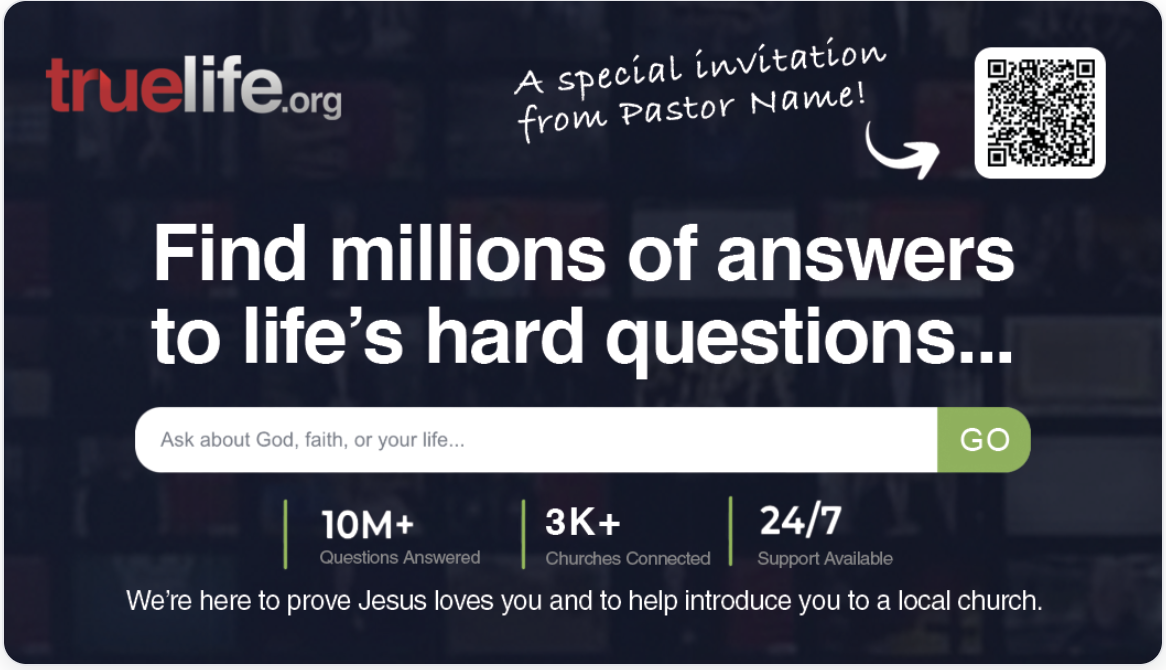
Words alone can drift away. Printed cards keep the message in someone’s hand and on their mind. Churches that order cards branded with their own logo and colors see members actually use them because the cards feel personal.
The back of each card carries clear language that lowers the fear of inviting. Unbelievers can visit the site first, read answers to hard questions, and explore at their own pace. No pressure conversation is required upfront.
One pastor in Montana told his congregation to place five cards on every chair before the service. After a short prayer at the end, people walked out ready. Within weeks they had given away thousands. The cards became the bridge between the sermon and real conversations during the week.
Creating a Weekly Rhythm That Lasts
Training sticks when churches repeat the same three steps every Sunday. First, prepare by putting cards on chairs or in pew corners. Second, preach the normal sermon—no special evangelism message required. Third, spend thirty seconds at the close asking everyone to hold a card while you pray.
This rhythm works because it doesn't demand extra time or new curriculum. People already show up on Sunday. The training simply uses that time to build a habit that carries into Monday through Saturday.
Pastors who follow this pattern report that even shy members and teenagers begin participating. One youth group started with kids who were terrified to talk to strangers. After a few weeks with the cards, those same students felt comfortable because they had something helpful to offer instead of needing to perform.
The results compound. One church ran out of fifteen thousand cards because the simple system kept everyone involved. Another pastor noted that members who had never invited anyone before now hand out cards regularly. The training removes the mystery and replaces it with a clear, repeatable action.
If you're a pastor looking for this kind of practical help, head to TrueLife.org/Pastors and watch the video on that page. If you're a church member, send the same link to your pastor so your whole congregation can start using these tools. You can also grab the free card option right from the menu bar. The goal is simple: help more people meet Jesus without adding pressure or complicated programs.