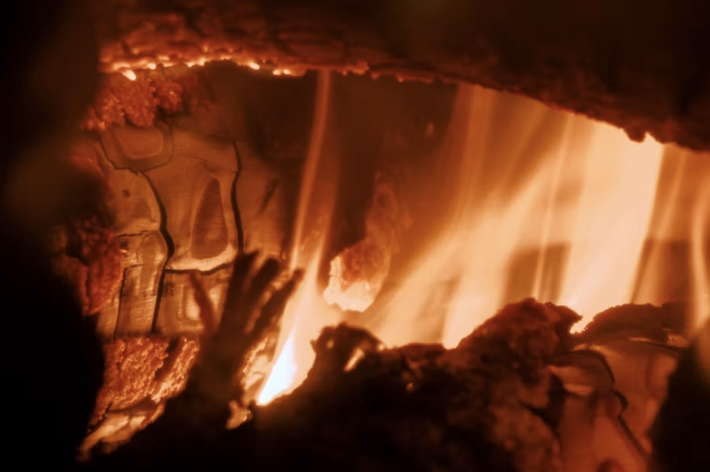
You've probably wondered if hell is just an old story or something more. The Bible treats it as a real destination for those who reject God, and the verses on this topic are sobering. They don't soften the truth.
Many people today push the idea aside, yet Scripture keeps returning to it with clear language. Jesus himself spoke more about hell than anyone else in the Bible. If we're going to take his words seriously, we need to look at what he and the rest of Scripture actually say.
Let's walk through the main passages together, see how they fit, and then face the bigger question they raise for every one of us.
The Old Testament Picture of Sheol and Judgment
The Old Testament uses words like Sheol and sometimes describes a place of fire and destruction. Psalm 9:17 says the wicked shall be turned into hell, along with all the nations that forget God. That verse comes right after a description of God's righteous rule, showing that judgment follows when people live as if he does not exist.
Isaiah 5:14 paints a vivid scene of hell opening its mouth without measure to swallow those filled with pride. The prophet links this to people who chase their own desires while ignoring the poor and the ways of the Lord. These aren't vague threats. They sit inside real historical calls for repentance during the days of the divided kingdom.
Proverbs 15:11 reminds us that hell and destruction are before the Lord, and even human hearts lie open to him. The writers understood that nothing stays hidden. When you read these passages side by side, you see a consistent thread: God sees everything, and a day of accounting is coming. That same God later sent his Son to offer rescue before that day arrives.
Jesus' Direct Teachings on Hell
Jesus used the word Gehenna, the valley of burning garbage outside Jerusalem, to describe hell. In Matthew 10:28 he told his followers not to fear those who can kill the body but cannot kill the soul. Instead, fear the one who can destroy both soul and body in hell. He spoke these words while sending out the twelve, knowing they would face real danger.
Mark 9:43-48 records Jesus saying it would be better to enter life maimed than to go into hell with two hands. He repeats the warning three times, each time quoting Isaiah about the worm that does not die and the fire that is not quenched. These are not side comments. They come in the middle of teaching about radical obedience and cutting off whatever causes sin.
In Luke 16, the story of the rich man and Lazarus shows a great chasm fixed between heaven and hell after death. The rich man begs for relief but receives none. Jesus tells this story to Pharisees who loved money and status. The detail that even a drop of water is denied drives home the finality. Jesus did not soften these words for his listeners, and he does not soften them for us.
Parables Revealing Eternal Consequences
Jesus often taught through stories that end with separation. Matthew 13 describes the wheat and the tares, where angels gather the tares to be burned. He explains the parable plainly: the field is the world, the good seed are the children of the kingdom, and the tares are the children of the wicked one. At the end of the age the reapers separate them forever.
Another parable in Matthew 25 shows the sheep and the goats. The king says to those on the left, depart from me into everlasting fire prepared for the devil and his angels. The reason given is their failure to show mercy to the least of these. Jesus ties eternal punishment directly to how people treated others in his name.
These stories were told to crowds that included both followers and critics. They force a choice: you either belong to the kingdom or you do not. There is no middle ground left open. The details about fire, weeping, and gnashing of teeth appear repeatedly because Jesus wanted people to grasp what was at stake.
Revelation's Vision of the Lake of Fire
The book of Revelation gives the clearest picture of final judgment. Revelation 20:14-15 says death and hell were cast into the lake of fire, and anyone not found written in the book of life was thrown there too. This comes after the great white throne judgment where the dead are judged according to their works.
Earlier in chapter 14, an angel warns that those who worship the beast will drink the wine of God's wrath and be tormented with fire and brimstone. The smoke of their torment rises forever. John records these visions while exiled on Patmos, writing to churches facing pressure to compromise.
The language is strong because the reality is strong. Revelation was written to encourage believers under threat, not to scare people for no reason. It shows that hell is not simply separation from God but active, ongoing judgment. The same book ends with the invitation to come and drink of the water of life freely, showing that escape remains open until the end.
Archaeological Finds That Back These Warnings
The Dead Sea Scrolls give us copies of Isaiah and other Old Testament books from before Jesus was born. One scroll contains the very passage about hell opening its mouth that we read earlier. When scholars compared it to later manuscripts, the text matched almost word for word. That means the warnings Jesus quoted were already fixed centuries before he spoke them.
These scrolls were hidden in caves near Qumran around the time of the Roman occupation. They survived because someone valued the words enough to protect them. The same words describe a real place of judgment. If the manuscripts are reliable, then the message about hell they carry is reliable too.
History keeps confirming that the Bible reports events and places accurately. When the Bible speaks of judgment, it does so from the same trustworthy source. That reliability makes the offer of salvation through Jesus even more urgent, because the warnings come from the same book that has stood every test.
We all carry a sin nature that separates us from God. No amount of good effort can erase it. Jesus, who is fully God and fully man, lived without sin, died on the cross in our place, and rose again. He offers forgiveness and eternal life to anyone who turns from sin and trusts him alone. That is the only way to escape the judgment the verses describe.
If you have never done so, you can pray right now: Dear Jesus, I believe you died for my sins and rose again. I confess you as my Lord and Savior. Please forgive me and come into my life. Amen.
Find a local church at TrueLife.org's Church Finder. If you're a Christian, share the Gospel with free cards from TrueLife.org's Free Cards section.